George Condo
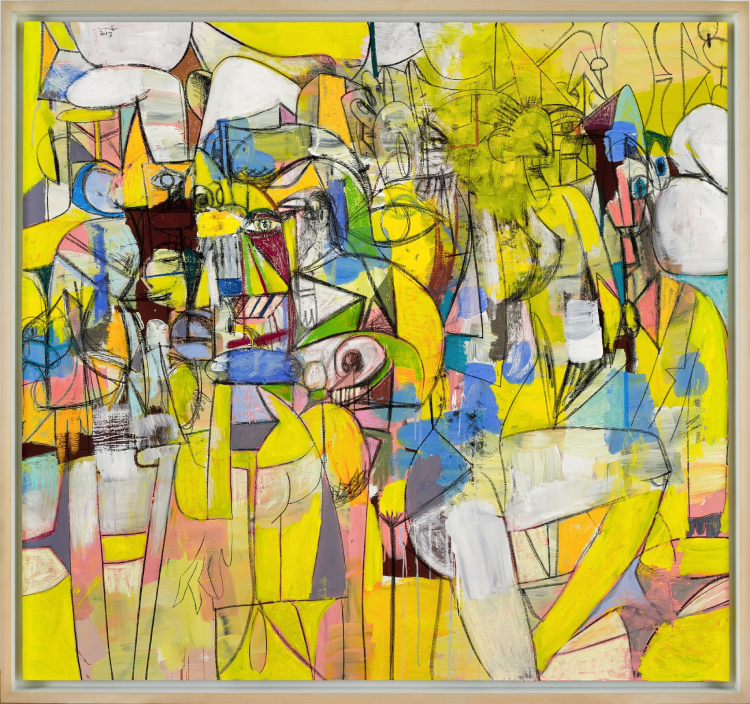
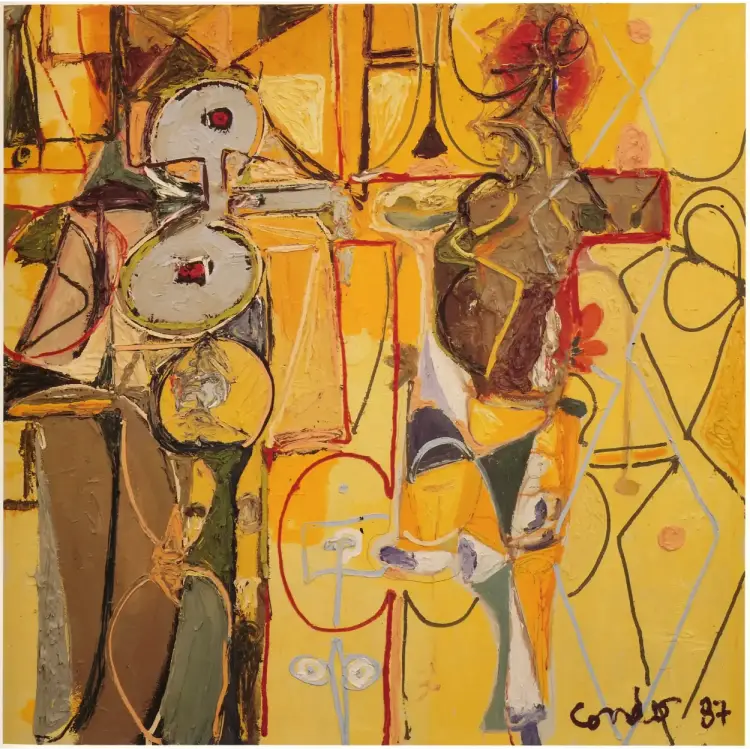
George Condo is widely recognized as one of the most influential living American artists. Over a career spanning more than four decades, George Condo has developed a complex and highly original body of work that draws upon historical traditions—most notably portraiture—to reflect contemporary psychological and social realities.
GEORGE CONDO
George Condo is widely recognized as one of the most influential living American artists. Over a career spanning more than four decades, George Condo has developed a complex and highly original body of work that draws upon historical traditions—most notably portraiture—to reflect contemporary psychological and social realities.
Born on December 10, 1957, in Concord, New Hampshire, Condo studied art history and music theory at the University of Massachusetts Lowell before moving first to Boston and then to New York City. In the late 1970s and early 1980s, he became deeply involved in New York’s downtown art and music scene. A pivotal early experience was his collaboration with Andy Warhol at the Factory, where Condo introduced Warhol to diamond dust and assisted in creating limited edition screenprints. This experience was formative in shaping Condo’s understanding of popular imagery, repetition, and the mechanics of the contemporary art world.
In the mid-1980s, Condo relocated to Paris, where he lived and worked for many years. Paris proved decisive in the evolution of his mature style, allowing him to engage directly with European painting traditions while refining what he later termed “Artificial Realism.” His work synthesizes the lessons of Old Master portraiture with modernist and postwar influences, including Francis Bacon, Willem de Kooning, Pablo Picasso, Arshile Gorky, Jean Dubuffet, and Philip Guston, while remaining wholly his own. Condo’s art resists simple categorization, blending classical draftsmanship with surrealism, abstraction, and psychological distortion to create an instantly recognizable visual language.
Condo’s early work in the 1980s included graffiti-inflected and street-art–inspired paintings that attracted attention within New York’s burgeoning downtown scene. Yet he quickly moved beyond these origins, driven by a determination to expand the expressive possibilities of painting. This impulse led to his signature approach: figures with fractured anatomies and exaggerated physiognomies that appear at once grotesque and comic, unsettling yet deeply human.
Faces in Condo’s paintings often register multiple emotional states simultaneously—melancholy, mania, joy, dread—challenging conventional notions of beauty, coherence, and identity. These psychologically charged portraits invite viewers to confront the instability of the self and the complexities of human consciousness.
Condo’s influence on contemporary art is profound. His work has played a significant role in shaping both Neo-Expressionism and postwar figurative painting, and his ability to fuse classical technique with modern sensibilities has earned him sustained international acclaim. His paintings are held in major public and private collections worldwide.
Beyond the visual arts, Condo’s influence extends into music and popular culture. In 2010, he designed the iconic cover artwork for Kanye West’s album My Beautiful Dark Twisted Fantasy, bringing his imagery to a global audience and cementing his status as an artist of broad cultural impact.
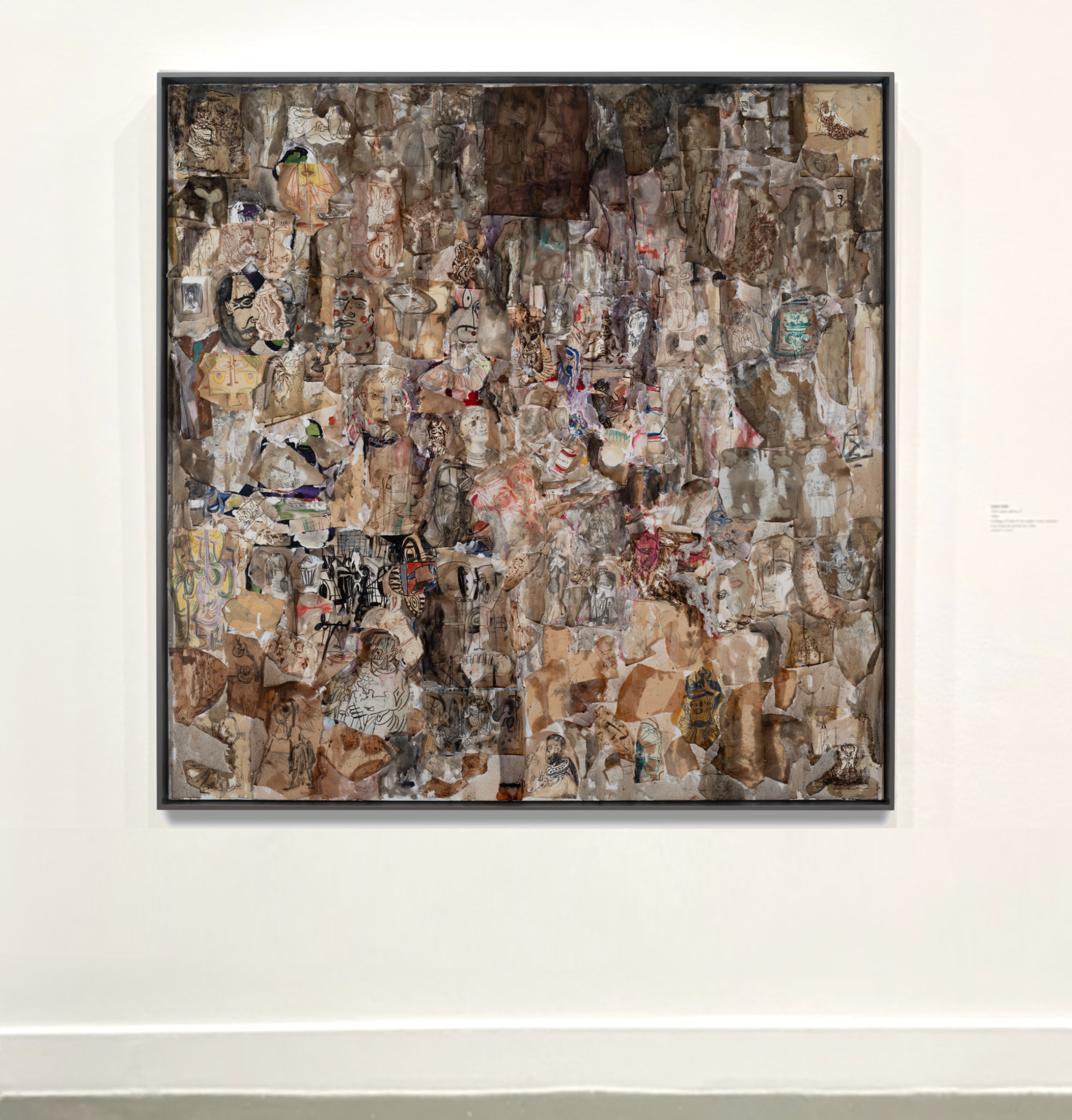
Tom and Jerry #2, 1986
George Condo, October 10, 2025 - February 15, 2026, Musée d’Art Moderne de Paris
Collection Joseph K. Levene
In October 2025, the Musée d’Art Moderne de Paris mounted a George Condo retrospective, Condo's most comprehensive exhibition to date in the artist’s career. Organized in collaboration with Condo himself, the exhibition includes over 200 works—80 paintings, 110 drawings, and 20 sculptures—tracing a non-chronological path through his signature themes of art-historical dialogue, figuration, and abstraction. A long-time collector of George Condo’s work, Joseph K. Levene has personally loaned three paintings to the exhibition, highlighting his own dedication to Condo’s art and legacy.
Never content with a single style or approach, George Condo continues to challenge artistic conventions. His paintings confront viewers with distorted reflections of the human psyche, urging a reconsideration of beauty, identity, and the nature of perception itself. Condo’s work stands as a testament to the enduring power of painting—at once intellectually rigorous, emotionally charged, and relentlessly innovative.