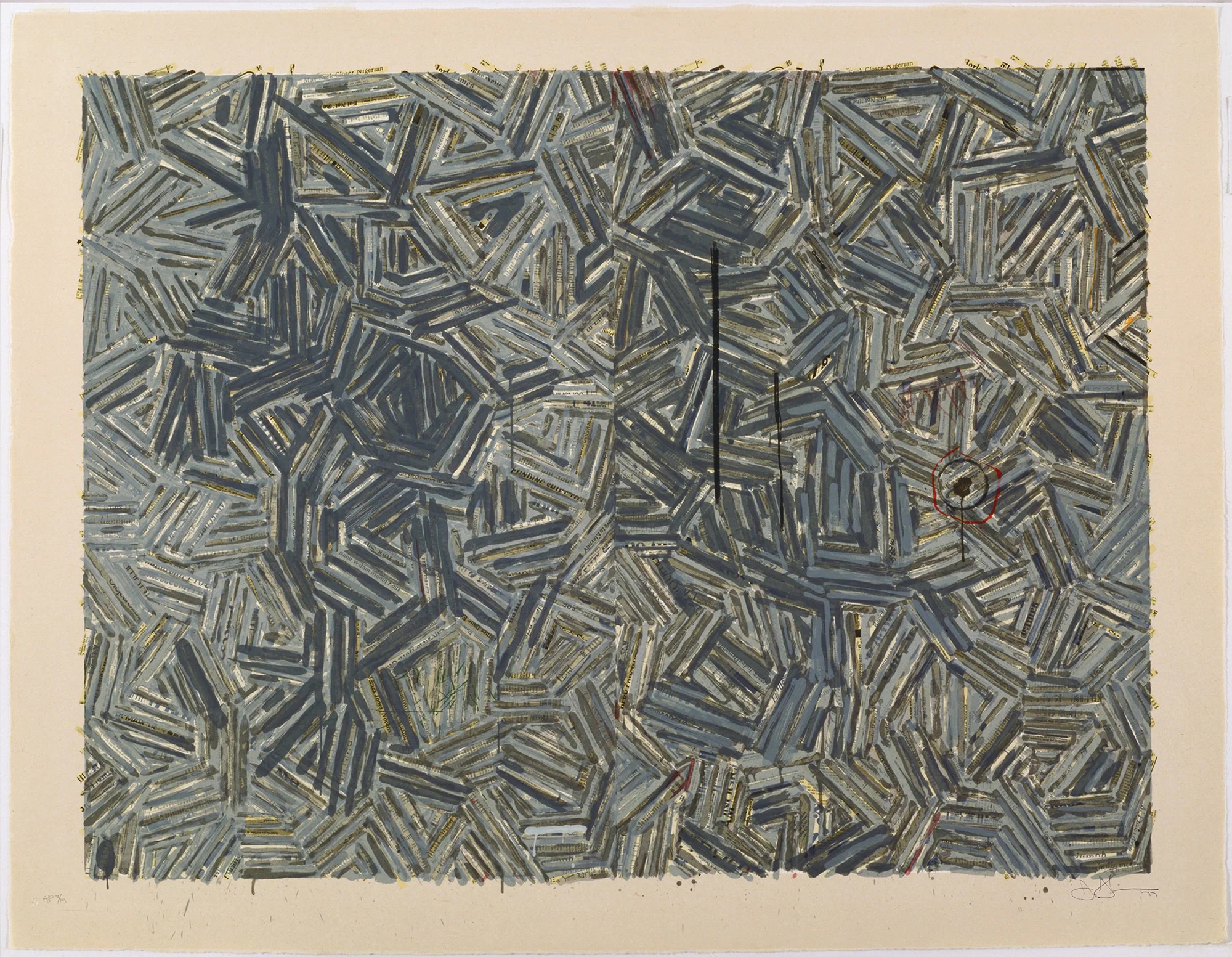
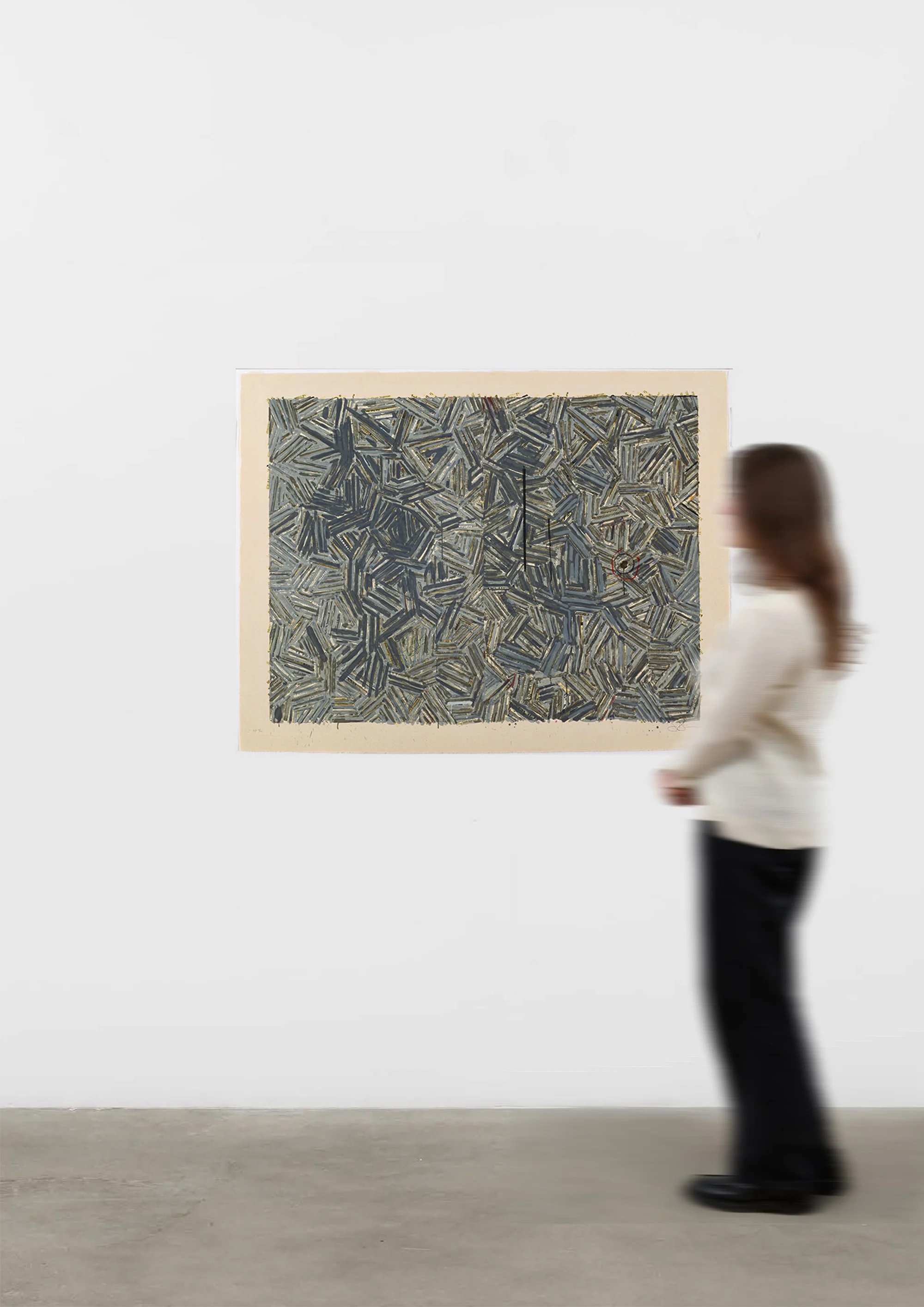
The Dutch Wives I (ULAE 187), 1977
paper: 43 1/4 x 56 1/4 inches
image: 37 3/4 x 50 inches
edition: 70 +19 AP's & 5 PP's
signed & dated in pencil "J Johns '77" lower right
numbered in pencil lower left
Printed by: Kenjiro Nonaka, Hiroshi Kawanishi, Takeshi Shimada
Co-published by Jasper Johns and Simca Print Artists, Tokyo, 1977
© Jasper Johns / Licensed by VAGA at Artists Rights Society (ARS), NY
Literature
Shigeo Chiba, Jasper Johns Prints Exhibition 1960–1989, Tokyo, 1990, Japan Art and Culture Association/Kokusai Geijutsu Bunka Shinkokai, n.p., plate 94, another impression reproduced.
Judith Goldman, Jasper Johns Prints 1977-1981, Thomas Segal Gallery, Boston, MA, 1981, n.p., Segal 1, another impression reproduced full page black and white.
Riva Castleman Jasper Johns: A Print Retrospective, New York: The Museum of Modern Art; Boston: New York Graphic Society, Books/Little Brown and Company, 1986, pg 108, another impression reproduced in full-page color.
Richard Field, The Prints of Jasper Johns 1960-1993: A Catalogue Raisonne, ULAE, New York, 1994, Catalogue Reference ULAE 187, n.p., another impression reproduced full-page color.
Roberta Bernstein, Jasper Johns The Screenprints, Fisher Landau Center, 1996, plate 14, n.p., another impression reproduced in color.
James Rondeu, Douglas Druick, Jasper Johns Gray, The Art Institute of Chicago, Yale University Press, CT, 2008, Catalogue Number 109, n.p., another impression reproduced full page color.
Jennifer Roberts and Jennifer Quick, Jasper Johns / In Press: The Crosshatch Works and the Logic of Print, exh. cat., Harvard Art Museums, Cambridge, MA, 2012, another impression reproduced p. 77.
Jennifer Roberts, Contact: The Art and Pull of Print, Princeton University Press, Princeton and Oxford, 2024), another impression reproduced in color p. 80.
Exhibited
The Museum of Modern Art, New York, Jasper Johns: A Print Retrospective, May 19–Aug 19, 1986, another impression exhibited.
The Seibu Museum of Art, Tokyo, Prints Exhibition 1960–1989, Traveled to The Seibu Department Store, Isetan Museum of Art, Tokyo, April 26th—May 15th, 1990, Isetan Department Store, Niigata, June 7-19, 1990, Isetan Department Store, Urawa, July 18-24, 1990, Isetan Department Store, Matsudo, August 9—August 14, 1990, Isetan Department Store, Shizuoka, August 23—August 28, 1990, another impression exhibited.
The Metropolitan Museum of Art, New York, Jasper Johns Gray, November 3, 2007-January 6, 2008, another impression exhibited.
The Art Institute of Chicago, Chicago Jasper Johns Gray, February 5, 2008-May 4, 2008, another impression exhibited.
The Museum of Modern Art, New York, Focus: Jasper Johns, December 5, 2008–February 16, 2009, another impression exhibited.
Harvard Art Museums, Cambridge, Jasper Johns / In Press: The Crosshatch Works and the Logic of Print, 5/22/2012-8/18/2012
New Orleans Museum of Art, LA, Jasper Johns Reversals, October 23, 2015-January 31, 2016, another impression exhibited.
Carnegie Museum of Art, Pittsburgh, An Art of Changes: Jasper Johns Prints, 1960–2018, October 12–January 20, 2020, another impression exhibited; exhibition traveled to these venues:
Walker Art Center, Minneapolis, February 16, 2020–January 3, 2021
Tampa Art Museum, Florida, April 28–September 5, 2021
Grand Rapids Art Museum, Michigan, October 2–January 9, 2022
Parrish Art Museum, Water Mill, New York, April 23–July 10, 2022
Whitney Museum of American Art, New York, Jasper Johns Mind/Mirror, September 29, 2021 - February 13, 2022, another impression exhibited.
Selected Museum Collections
Museum of Modern Art, New York
The Gibbes Museum of Art, Charleston
Harvard University Art Museums, Cambridge
The Museum of Contemporary Art, Los Angeles
Walker Art Center, Minneapolis
The Whitney Museum of American Art, New York
Rhode Island School of Design, Providence
Saint Louis Art Museum, St Louis
Gibbes Museum of Art, Charleston
Art Institute of Chicago, Chicago
Museum of Fine Arts, Boston
Davison Art Center, Wellesley
Additional Photos
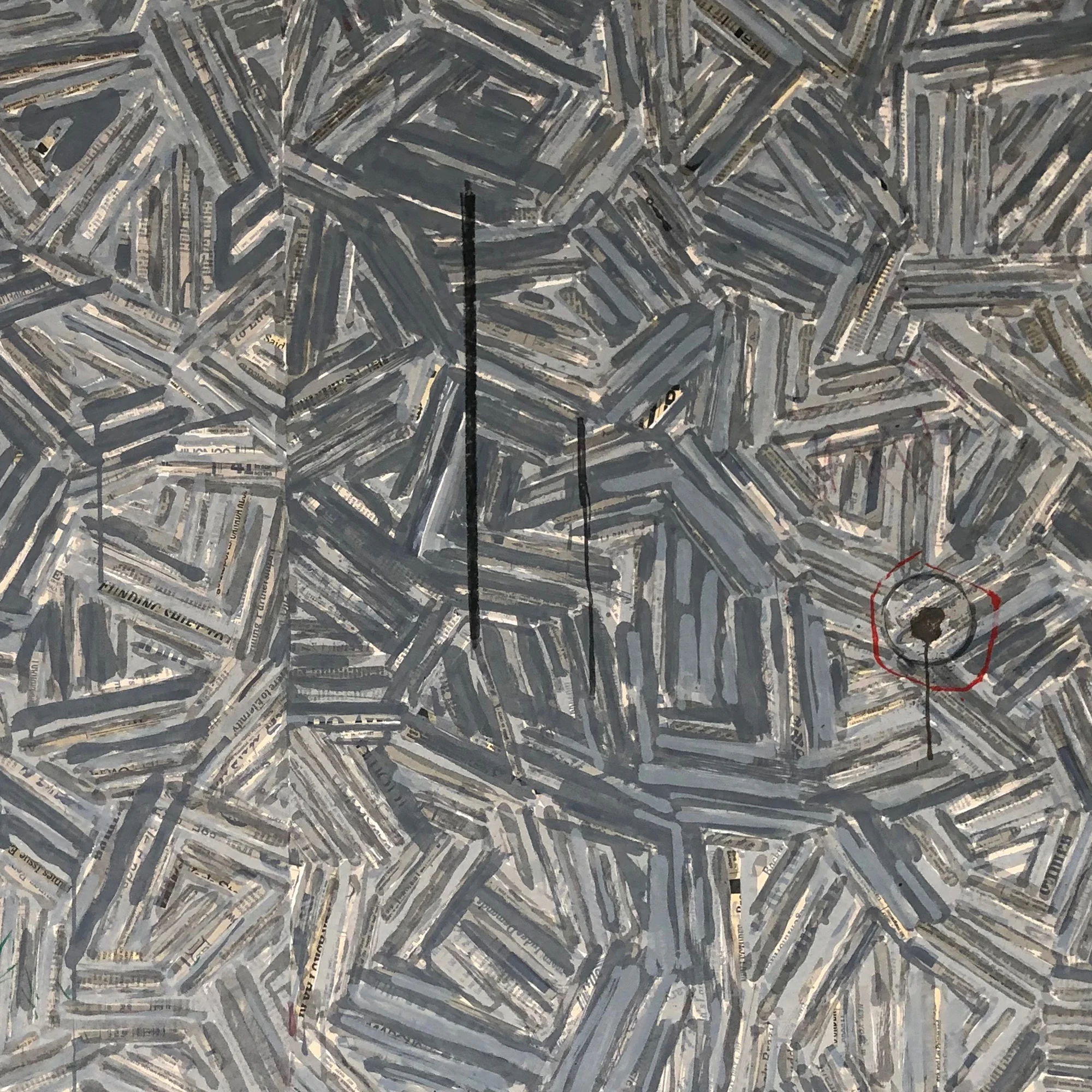
Image Detail
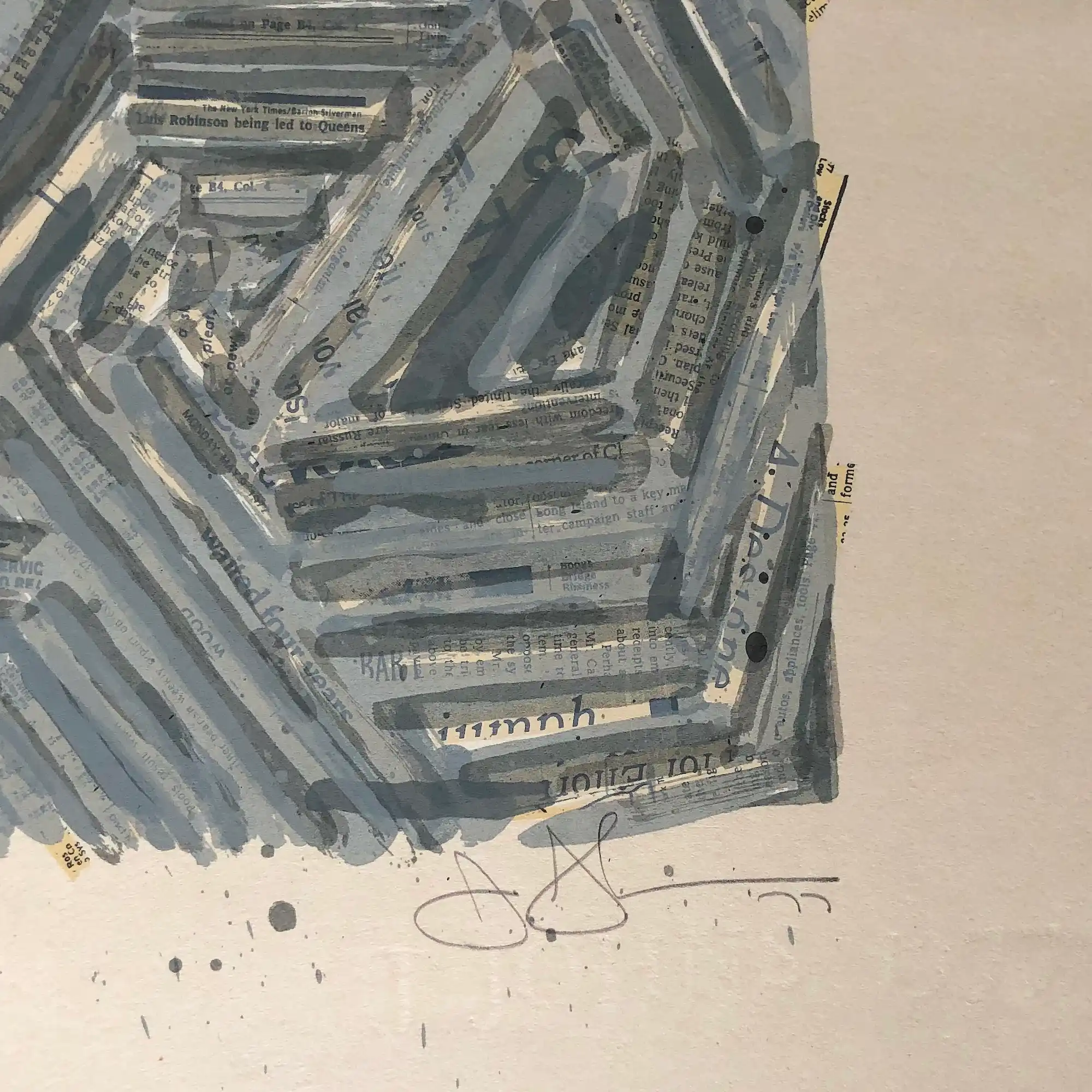
Signature & Date lower right
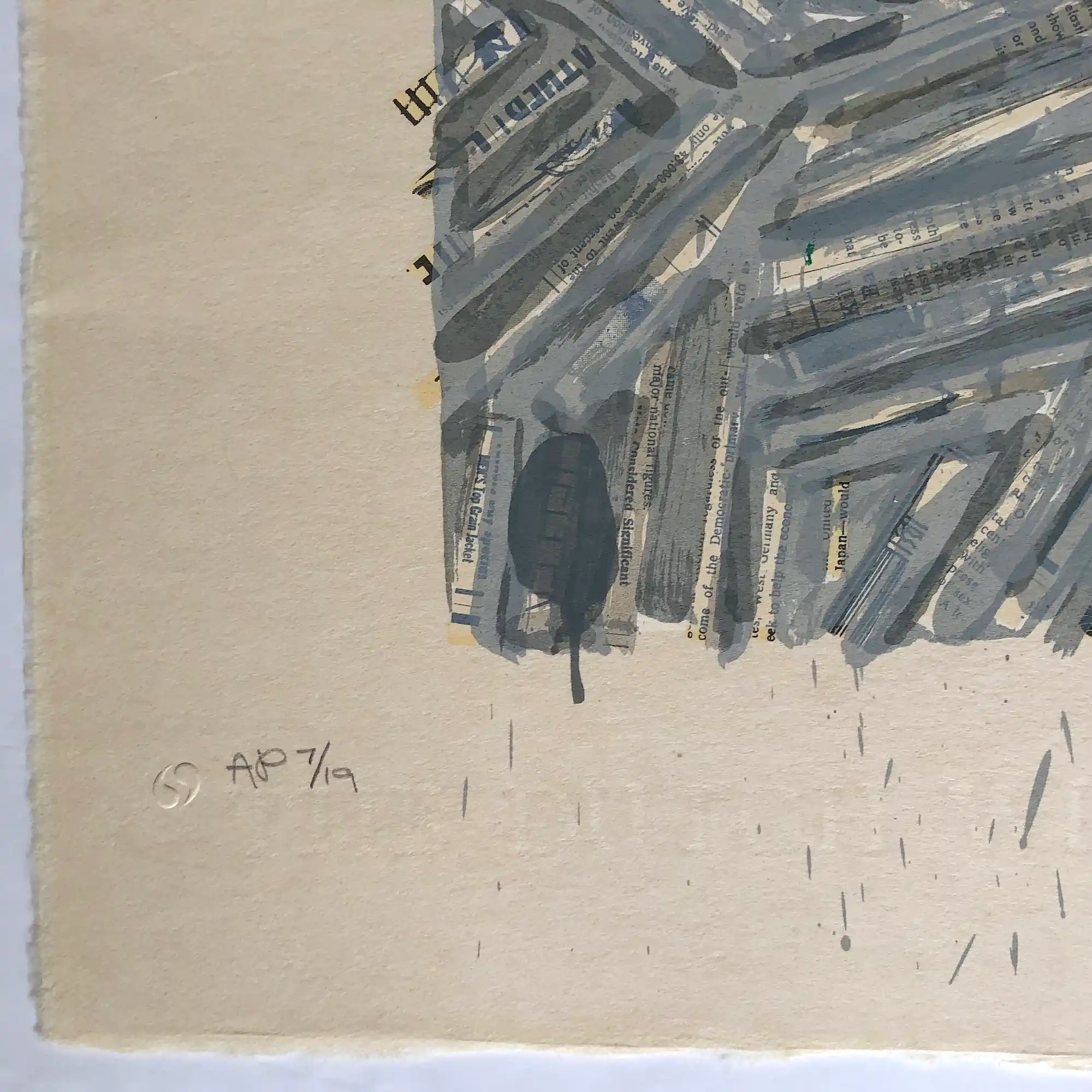
Edition Number lower left
Jasper Johns, a pivotal figure in postwar American art, is celebrated for an approach that merges everyday imagery with layered symbolism, challenging conventional distinctions between representation and abstraction. By the 1970s, Johns had moved beyond the familiar flags, targets, and numerals that defined much of his work in the previous decade, embracing increasingly abstract compositions centered on the cross-hatch motif. First appearing in his 1972 painting Untitled, the motif evolved into a complex visual language through Johns’s experimentation with color, texture, and printmaking processes. One of the most significant works to emerge from this period is The Dutch Wives, first realized as a gray encaustic and collage painting in 1975 and later transformed into the monumental screenprint The Dutch Wives I (ULAE 187), 1977.
JASPER JOHNS DUTCH WIVES
Jasper Johns, a pivotal figure in postwar American art, is celebrated for an approach that merges everyday imagery with layered symbolism, challenging conventional distinctions between representation and abstraction. By the 1970s, Johns had moved beyond the familiar flags, targets, and numerals that defined much of his work in the previous decade, embracing increasingly abstract compositions centered on the cross-hatch motif. First appearing in his 1972 painting Untitled, the motif evolved into a complex visual language through Johns’s experimentation with color, texture, and printmaking processes. One of the most significant works to emerge from this period is The Dutch Wives, first realized as a gray encaustic and collage painting in 1975 and later transformed into the monumental screenprint The Dutch Wives I (ULAE 187), 1977.
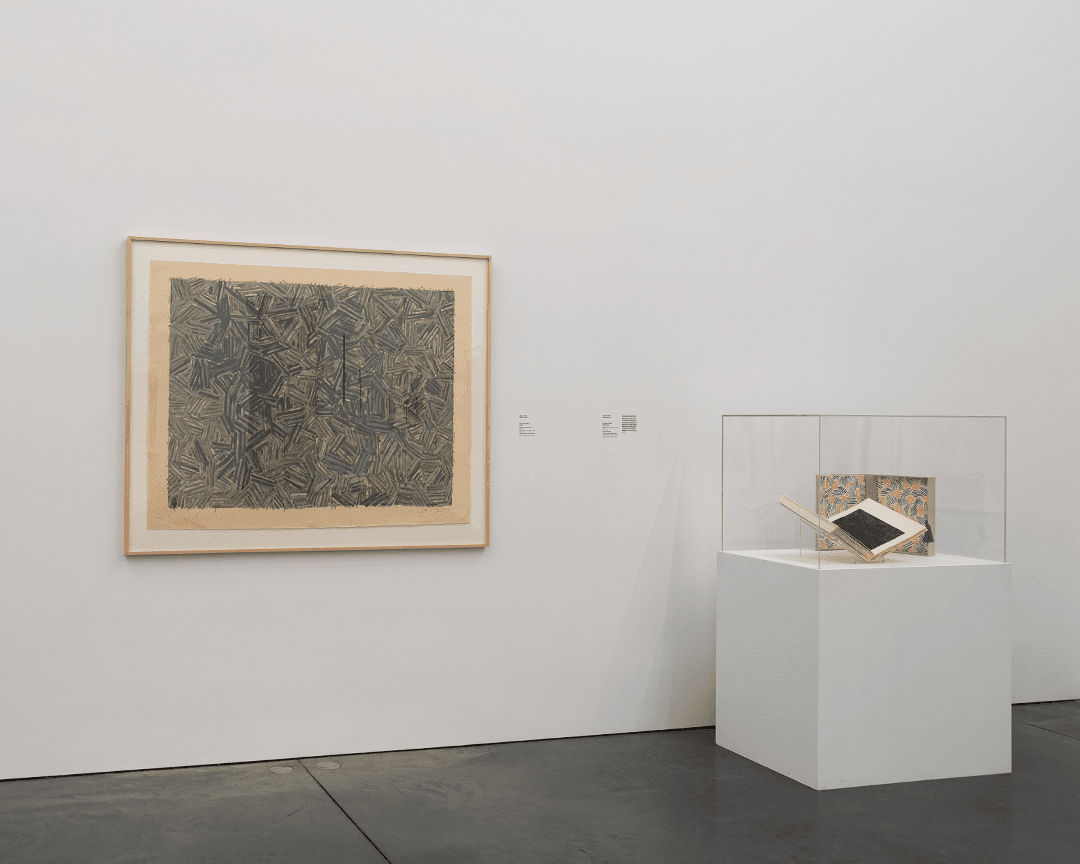
The title Dutch Wives derives from the colloquial term “Dutch wife,” originating in Dutch colonial Indonesia, referring to a woven bamboo or rattan bolster used to stay cool while sleeping in tropical climates. Johns’s appropriation of the phrase reflects his longstanding fascination with language, cultural displacement, and the instability of meaning. Like many of his titles, the phrase introduces an associative framework without fully explaining the imagery, allowing ambiguity to remain central to the viewer’s experience.
The 1975 painting exemplifies Johns’s mastery of encaustic, a medium composed of hot wax and pigment that produces a dense, tactile surface. Combined with collage elements, the encaustic creates an intricate interweaving of texture, gesture, and material presence. Layers of newspaper fragments embedded within the composition simultaneously reveal and obscure meaning, a recurring strategy in Johns’s work that transforms ordinary printed matter into elusive visual information. The painting’s two adjoining panels appear at first glance to mirror one another, yet closer examination reveals subtle inconsistencies that undermine the expectation of perfect repetition. This tension between duplication and variation became a defining aspect of the subsequent print.
Created two years later in collaboration with master printer Hiroshi Kawanishi and Simca Print Artists, The Dutch Wives I reflects Johns’s deep commitment to experimentation within the screenprint medium during the 1970s. Johns had already explored lithography and intaglio extensively in the 1960s, but screenprinting offered new possibilities for layering, repetition, and tonal complexity. Executed with twenty-nine screens on Kurotani Kozo paper, the nearly five-foot-wide print transforms the tactile density of the encaustic painting into a remarkably intricate printed surface. Whereas the original painting relies on the physical build-up of wax, brushstrokes, and collage, the screenprint achieves its complexity through thin accumulations of ink and wax pushed through multiple screens in successive layers.
The relationship between painting and print is central to understanding The Dutch Wives I. In the painting, the two panels remain physically distinct; in the screenprint, Johns conjoins the composition into a unified image, making the imperfect mirroring of the left and right halves more difficult to immediately perceive. The resulting composition heightens the rhythmic repetition of the cross-hatch pattern while simultaneously destabilizing visual certainty. This doubling effect echoes Johns’s broader investigation into perception and the mechanics of looking.
The treatment of newspaper imagery further distinguishes the print from its painted counterpart. While Johns incorporated actual newspaper fragments directly into the 1975 encaustic painting, he constructed an entirely separate collage of newspaper strips from different dates and years for the 1977 screenprint. These fragments were photographed, transferred, and photo-screened, ultimately passing through multiple stages of reproduction before appearing in the final work. The newspaper text therefore exists at several removes from its original source, reinforcing the sense of distance and illegibility that characterizes much of Johns’s use of language and printed media. Through these layered transfer processes, ordinary newsprint becomes abstracted into texture and pattern rather than functioning as readable information.
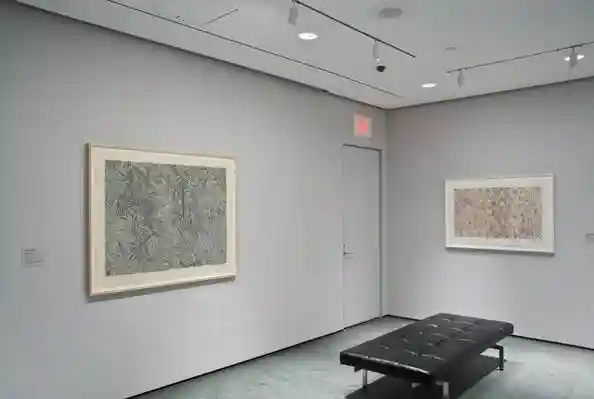
The Dutch Wives I belongs to a broader group of ambitious Simca color screenprints from the early 1970s, including Flags I (ULAE 128), 1973 and Target (ULAE 147), 1974, all of which employ dozens of layers of ink to achieve extraordinary tonal and textural variation. In these works, Johns transformed screenprinting from a medium often associated with flatness into one capable of remarkable visual depth and material complexity. The wax incorporated into both the encaustic painting and the print further links the two mediums, emphasizing Johns’s sustained interest in the relationship between surface, process, and perception.
Because of the technical sophistication and material sensitivity of Johns’s prints, condition plays a critical role in preserving both their aesthetic integrity and market value. Issues such as mat staining, foxing, discoloration, or attenuated colors can substantially diminish the visual impact of the work, particularly in prints that depend upon subtle tonal layering and surface nuance. Collectors should therefore exercise caution when evaluating works described as being in “good condition” despite visible defects. Transparency from dealers and auction houses is essential, as misleading photography or artificially saturated images can distort the true appearance of a print. Accurate documentation and honest condition reporting are vital not only for maintaining market confidence but also for preserving the historical integrity of Johns’s work for future generations.
Today, The Dutch Wives I stands as one of the defining achievements of Jasper Johns’s printmaking practice. Through its complex layering of imagery, sophisticated technical execution, and exploration of repetition, materiality, and perception, the work encapsulates Johns’s enduring ability to transform familiar forms into deeply enigmatic visual experiences.
1978, 20 minutes, with sound by Richard Teitelbaum